Making a Jira integrated bug reporting platform work for users

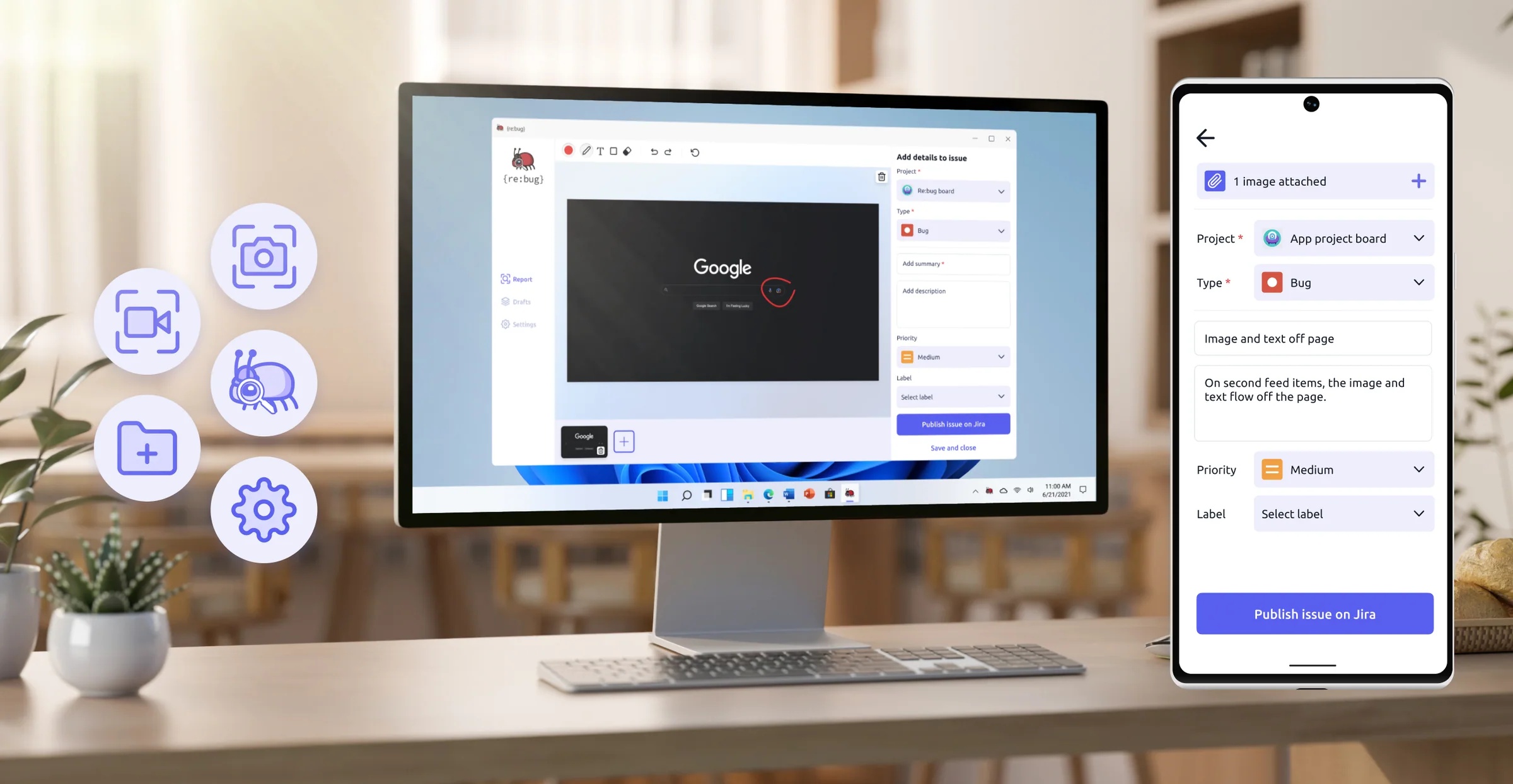
Overview
While working at ProdActive Solutions as a Lead Product Designer, I led the hands-on UX and product design for a suite of Jira-integrated QA apps designed to streamline bug reporting workflows. Through user testing and iterative redesign, we uncovered usability issues, surfaced overlooked features, and worked closely with engineers to create faster, more intuitive reporting experiences.
The result was a significant increase in workflow efficiency and feature adoption, helping pioneer a new business stream for ProdActive Solutions.
- My role
- Lead Product Designer
- Core team
- 11 people
- Lead Product Designer
- Snr Product Designer
- 8 x Engineers
- Product Manager
- Methods
- Product Design
- Quant Research & Data
- User Testing
- UX Design
- Storyboarding
- Tools
- Figma
- UserTesting.com
- AI Tools (ChatGPT)
- Miro
Results
avg. boost in users accessing key features and workflows
avg. increase in task speed during key workflows
new business stream for ProdActive Solutions
The product as it stood
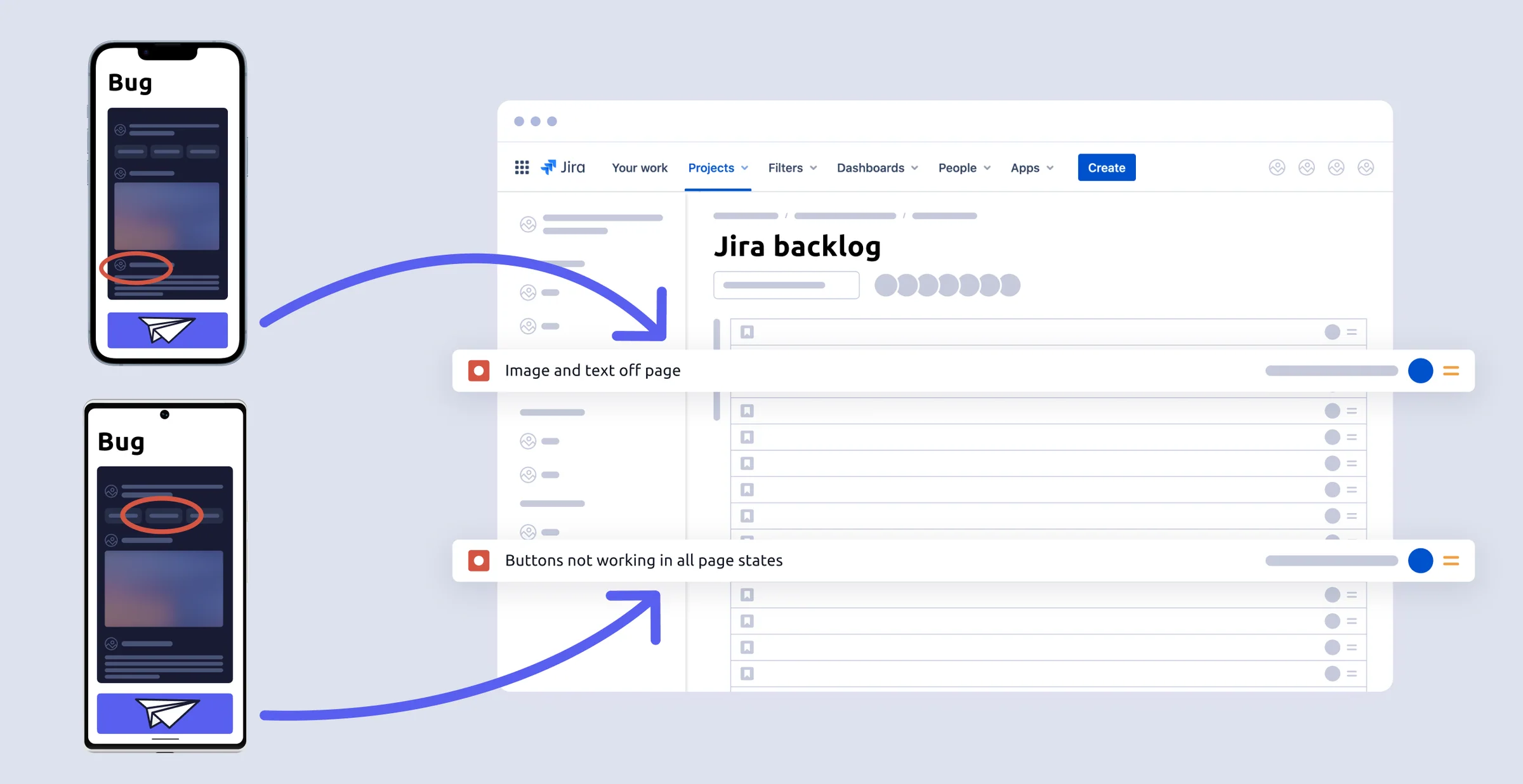
The dev team built a Jira integrated platform for Android and iOS aimed at speeding up bug reporting by allowing bugs to be reported directly to the Jira backlog.
Problem framing
We built our understanding of the problem space through qual research after analytics highlighted issues with the live platform.
The initial problem
Early drop-off suggested usability or desirability issues were limiting adoption beyond our organisation.
Usability testing
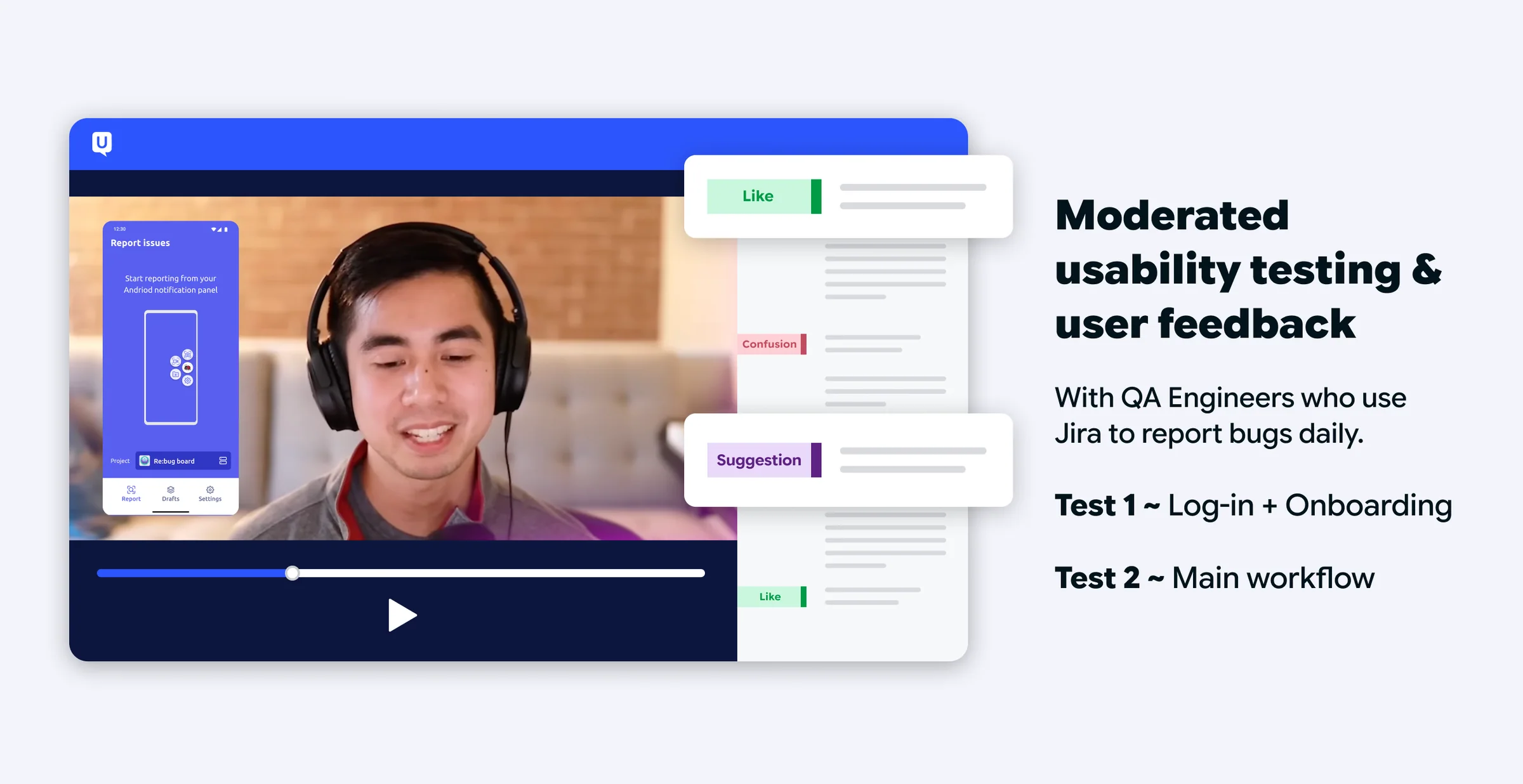
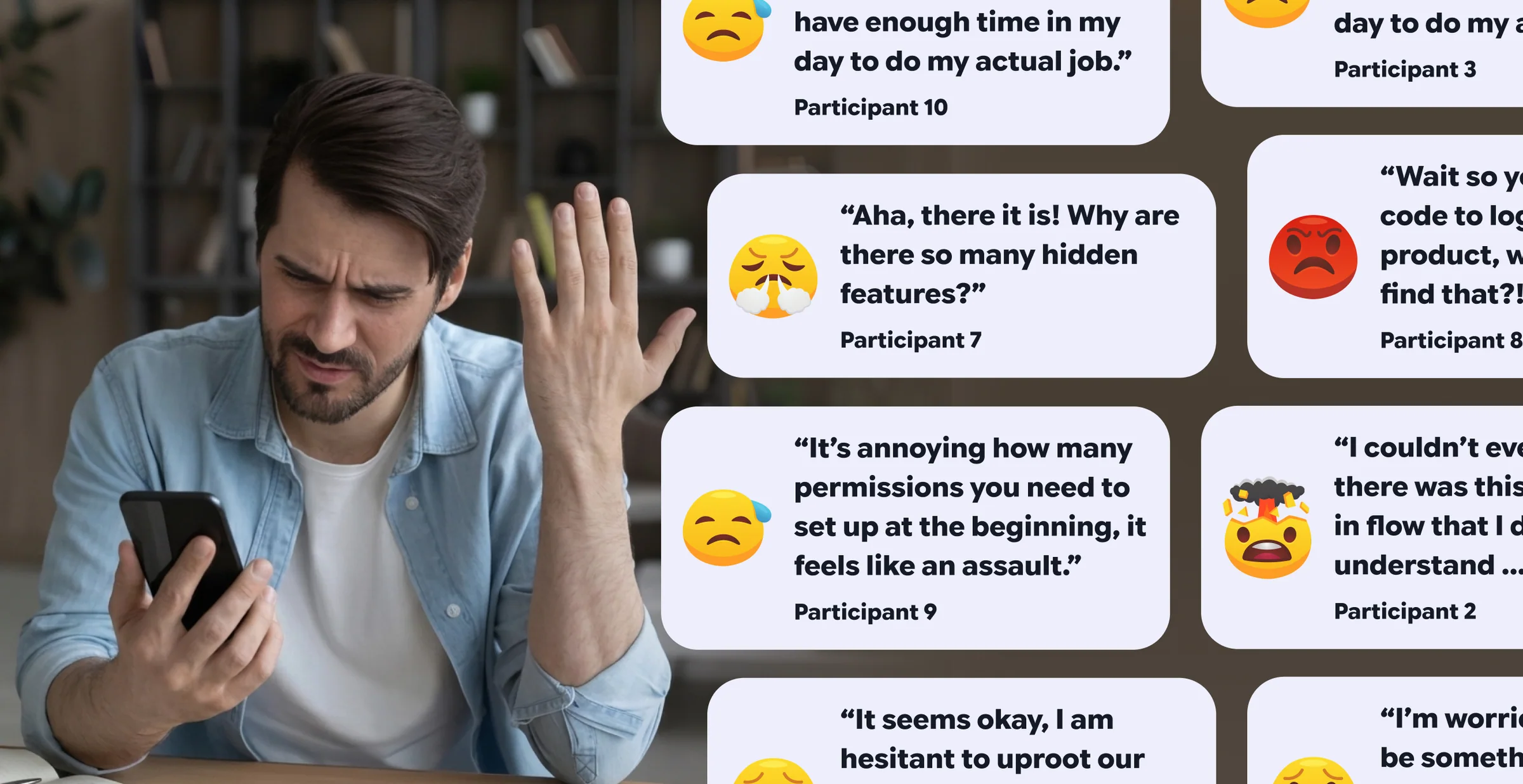
We conducted qualitative user testing with five users to investigate each area where analytics showed problems, uncovering usability issues, hidden features, and workflow friction.
Discovering key issues
As a team we clustered the issues identified during the studies in Miro. The synthesis revealed key workflow friction and highlighted opportunities to design a more user-centred solution.
Shaping personas
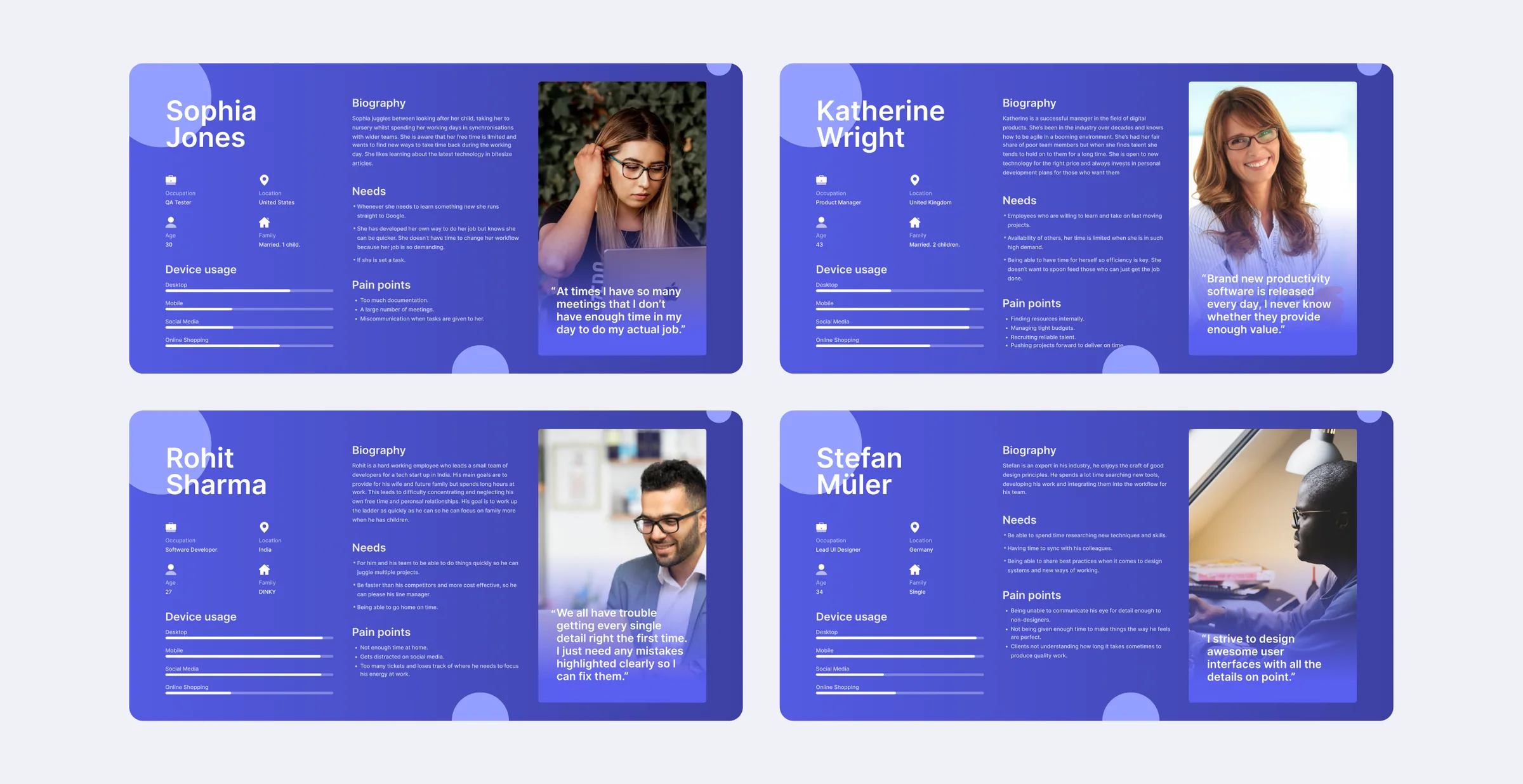
While I worked on the analysis, I asked another Product Designer to develop user personas using insights from the qualitative studies to align the team around key user needs, design goals, and use cases.
The personas evolved over time as we gathered additional research, data and insights.
Redirect & redesign
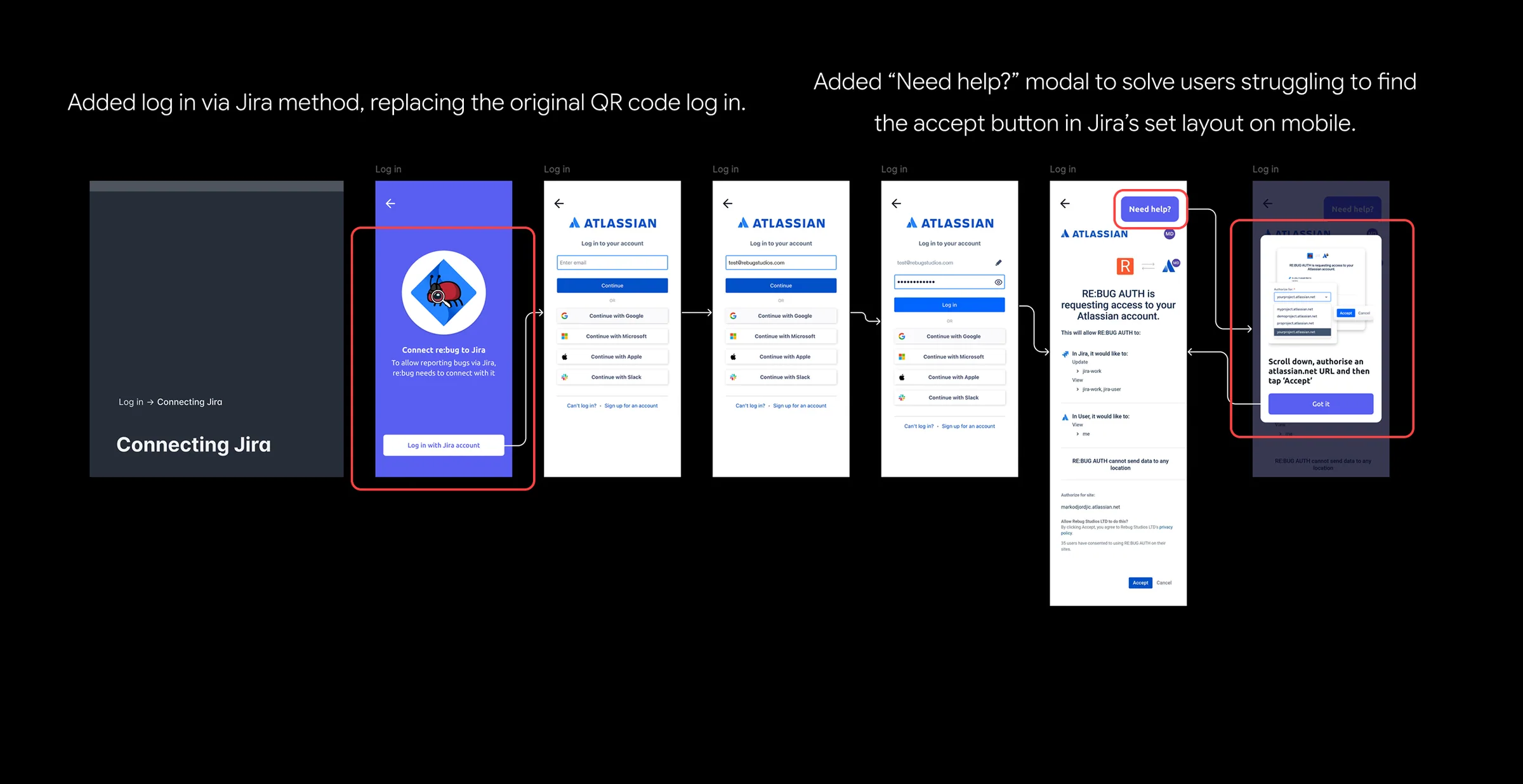
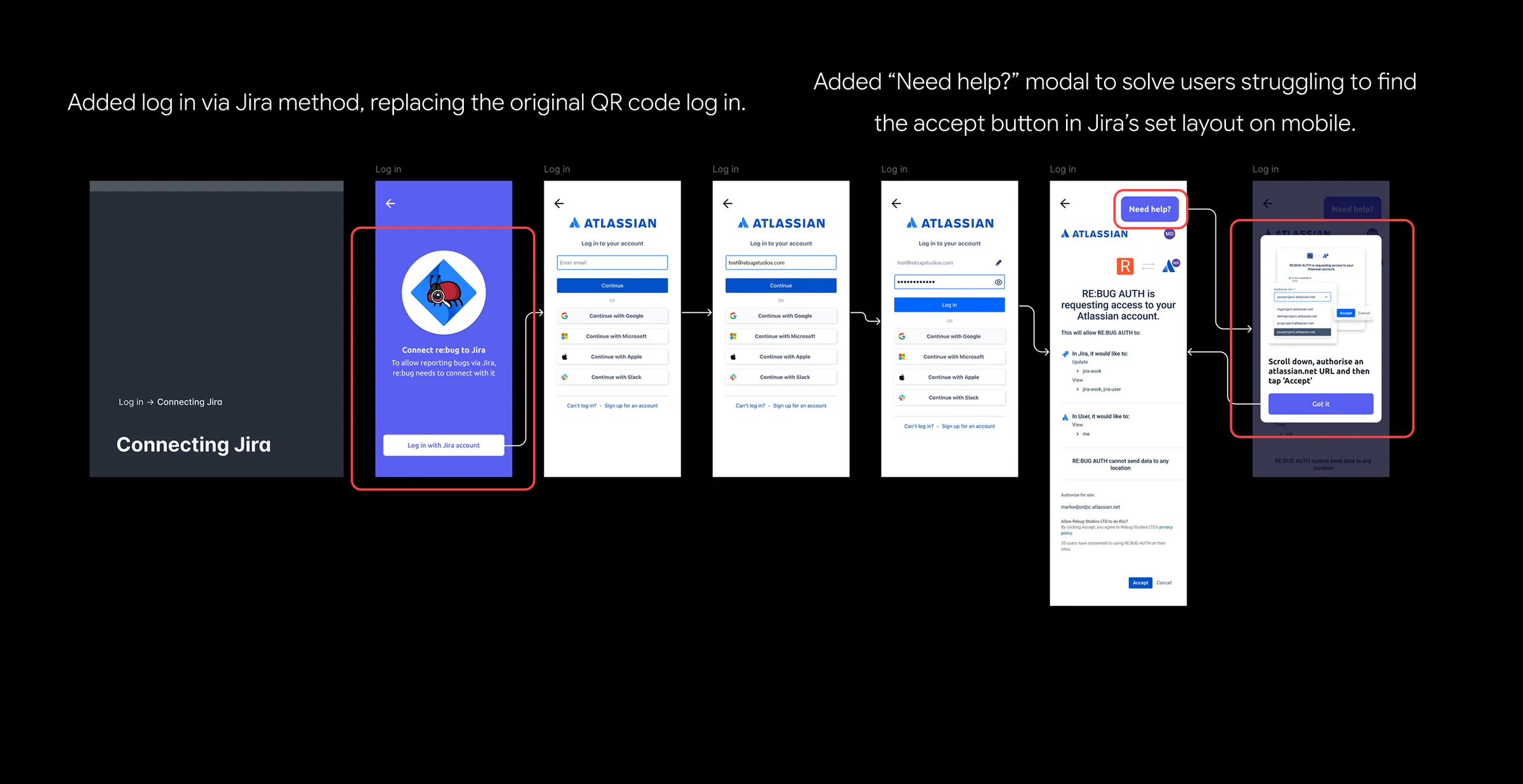
Working with another Product Designer and Engineers, we introduced a more user-centred experience within the platform's technical constraints.
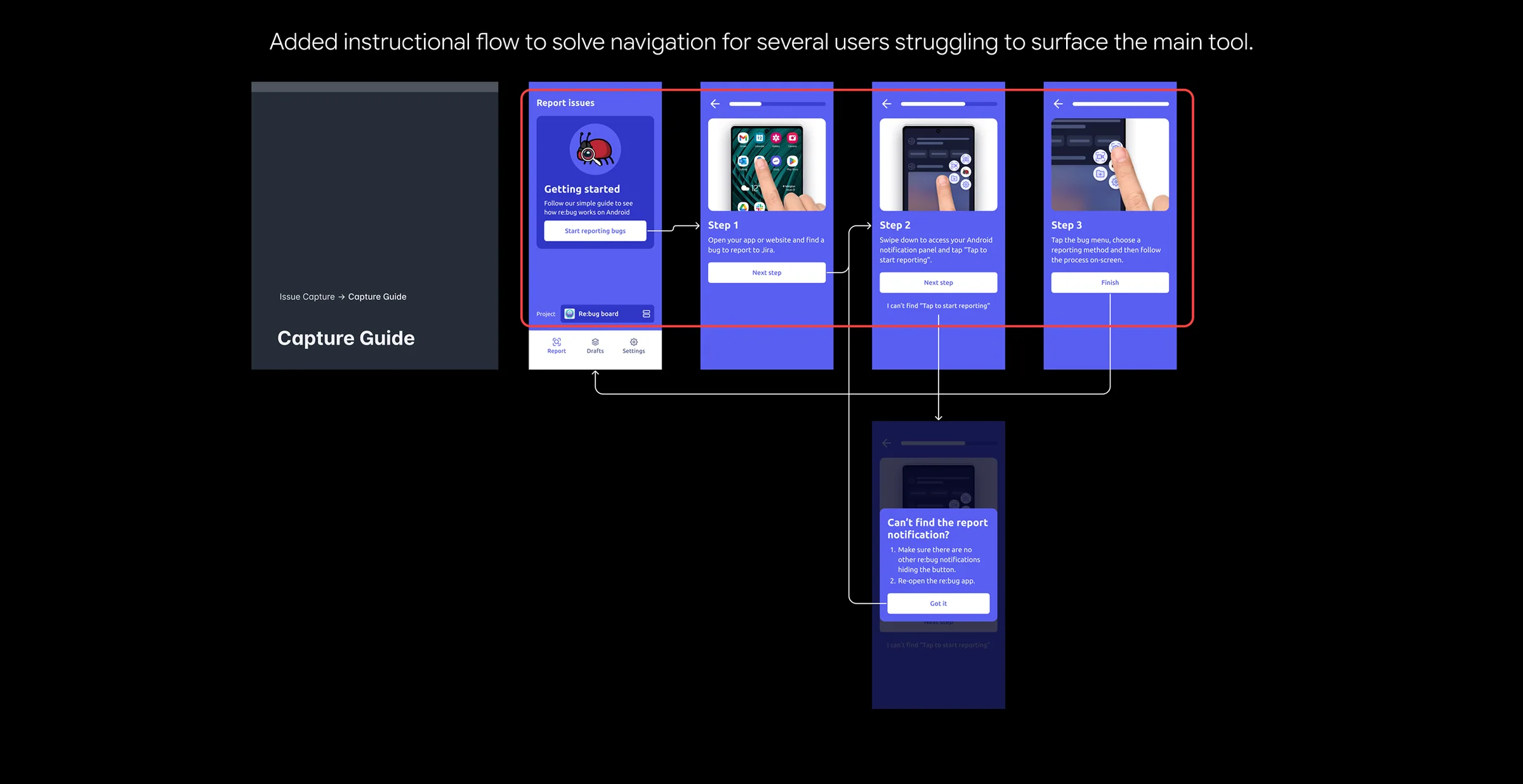
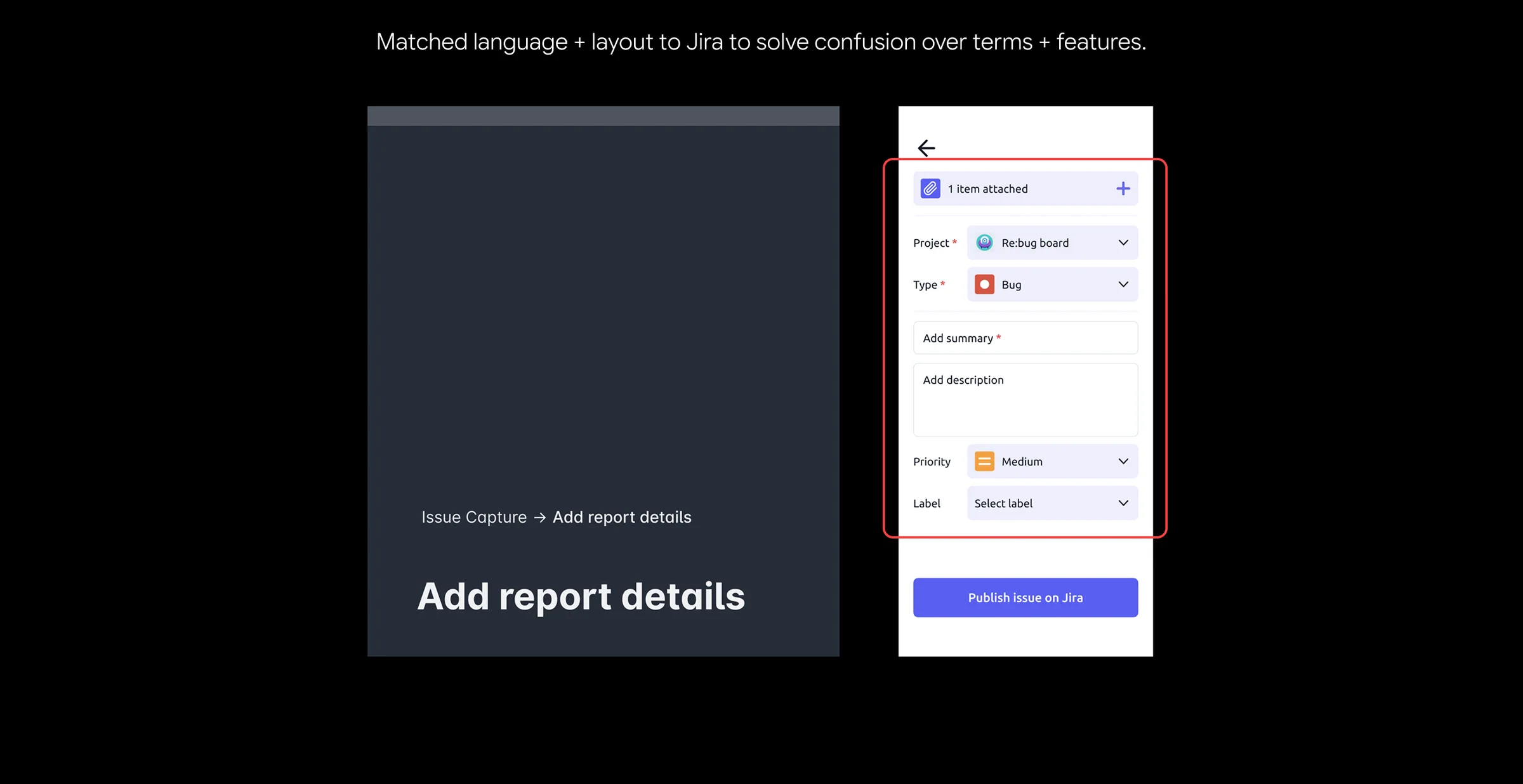
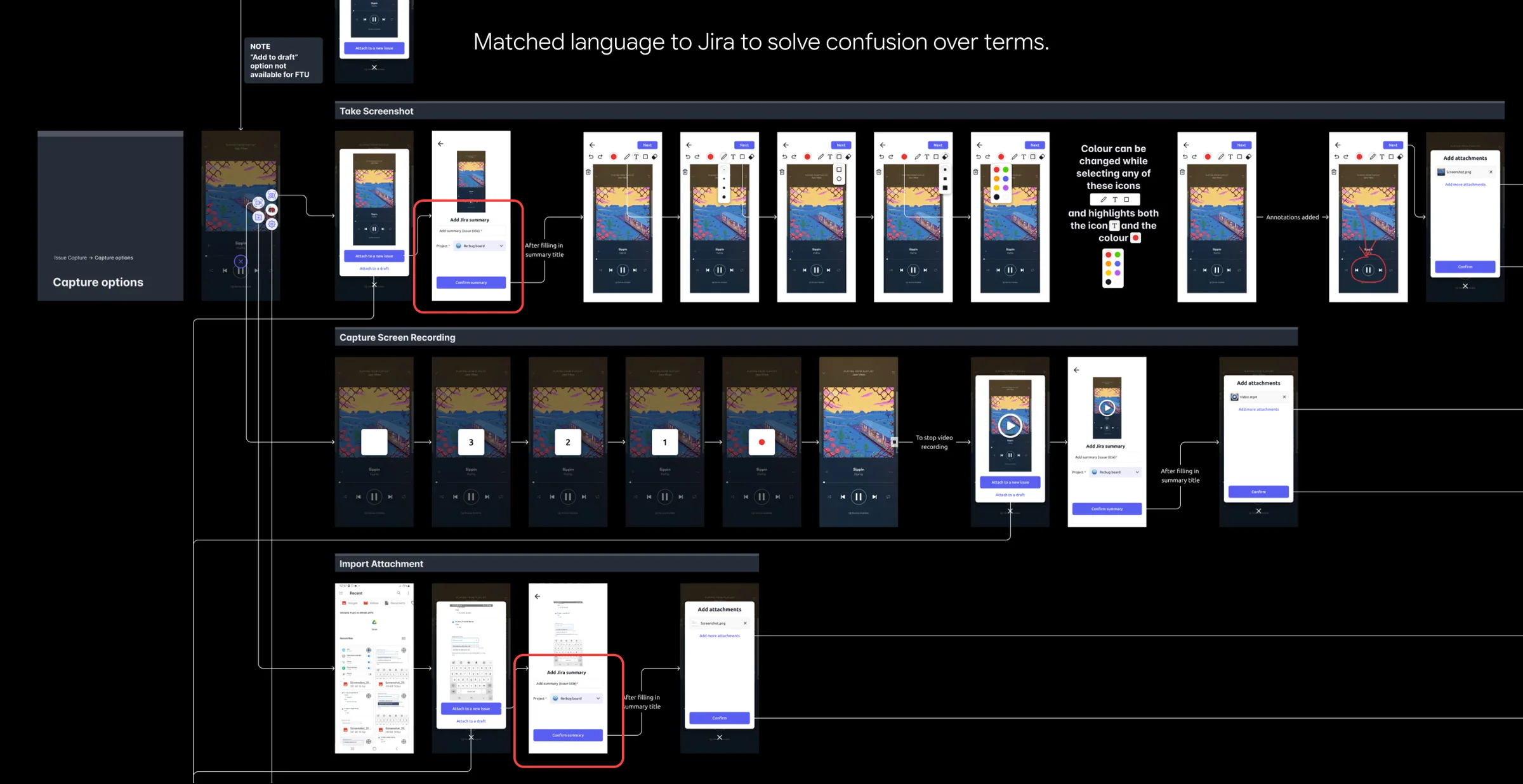
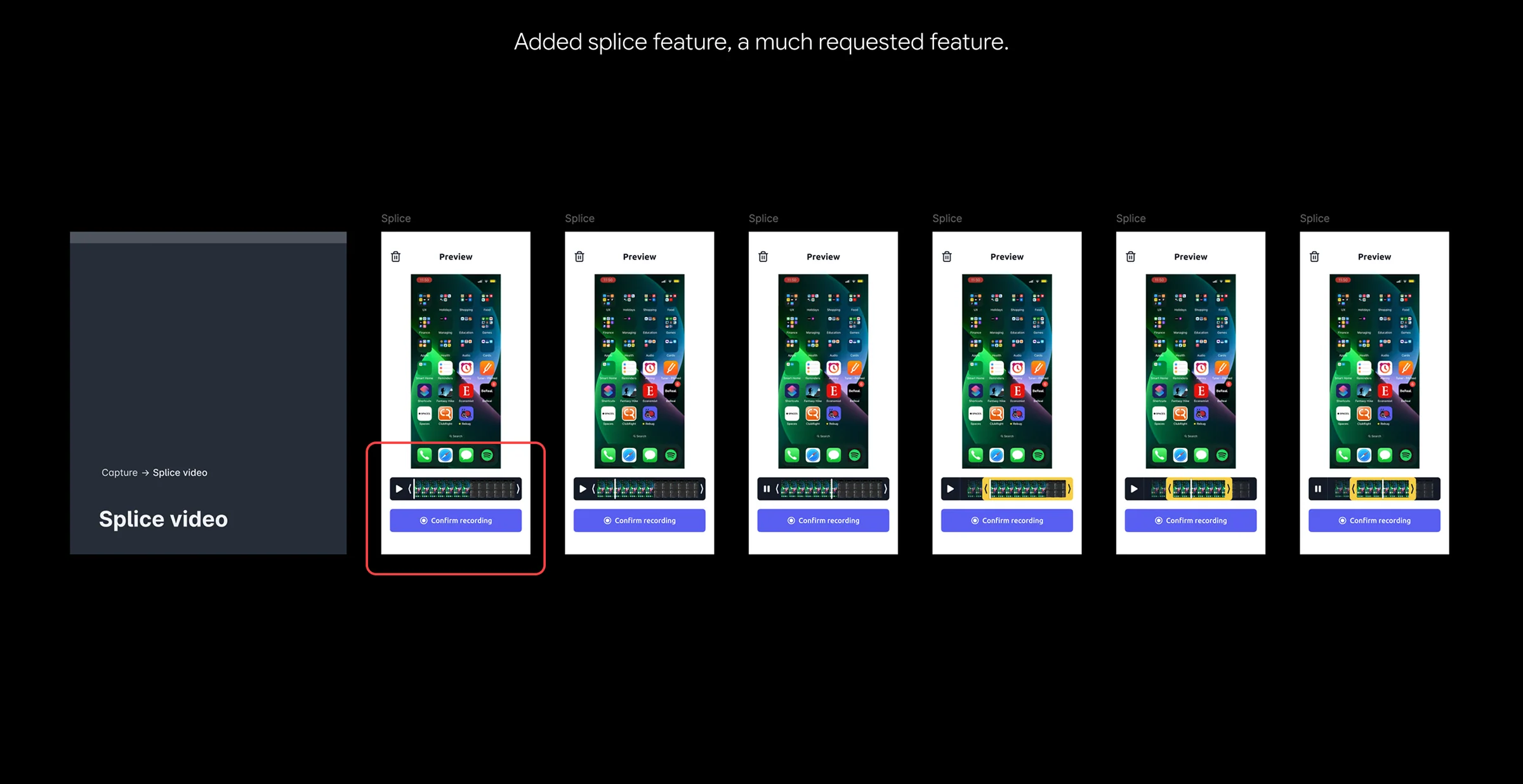
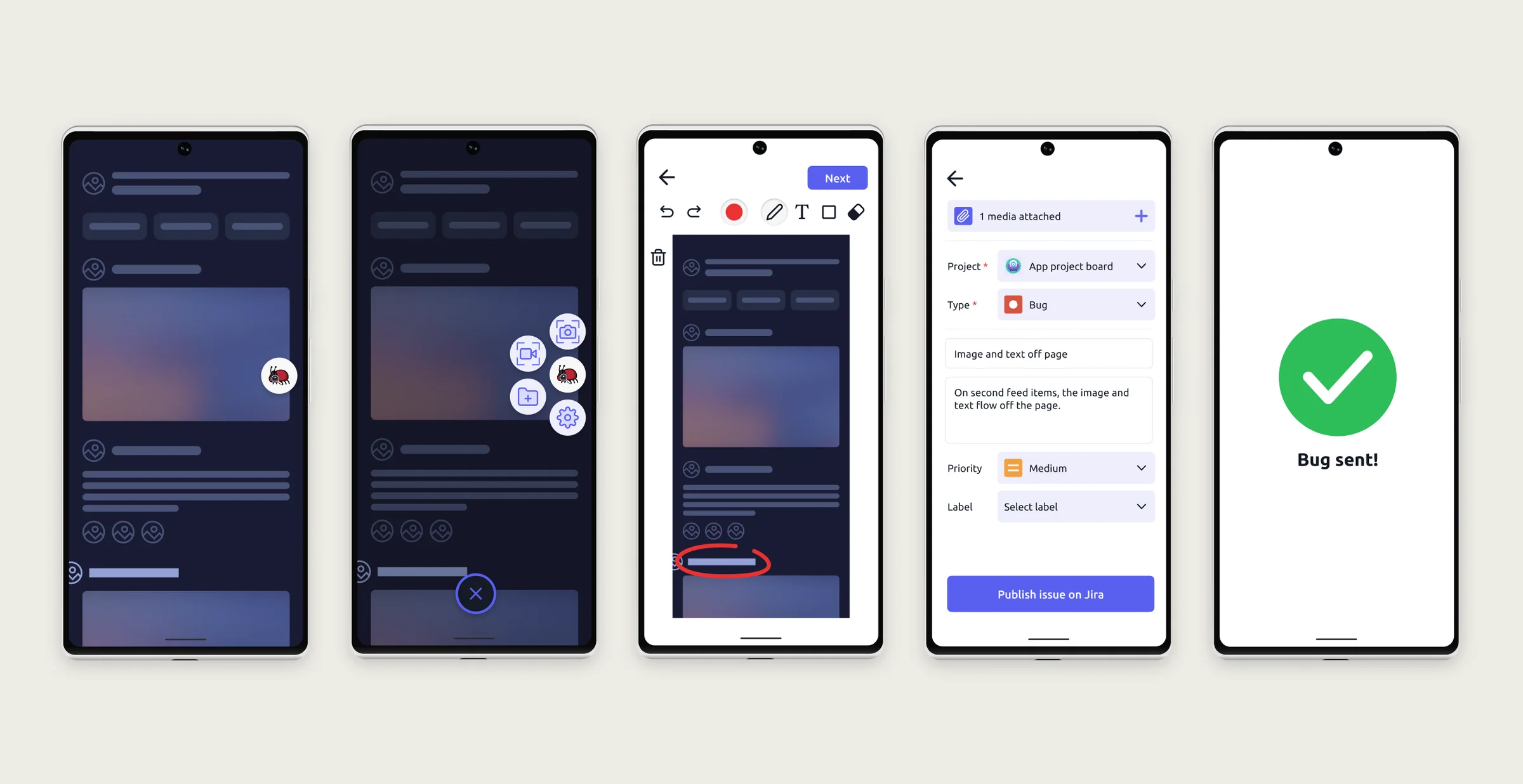
Below are a few examples from the Android app.
The final product
The updated product streamlined issue reporting, provided clearer guidance, and allowed bug reports to flow directly into the Jira backlog using Jira-matched design patterns.
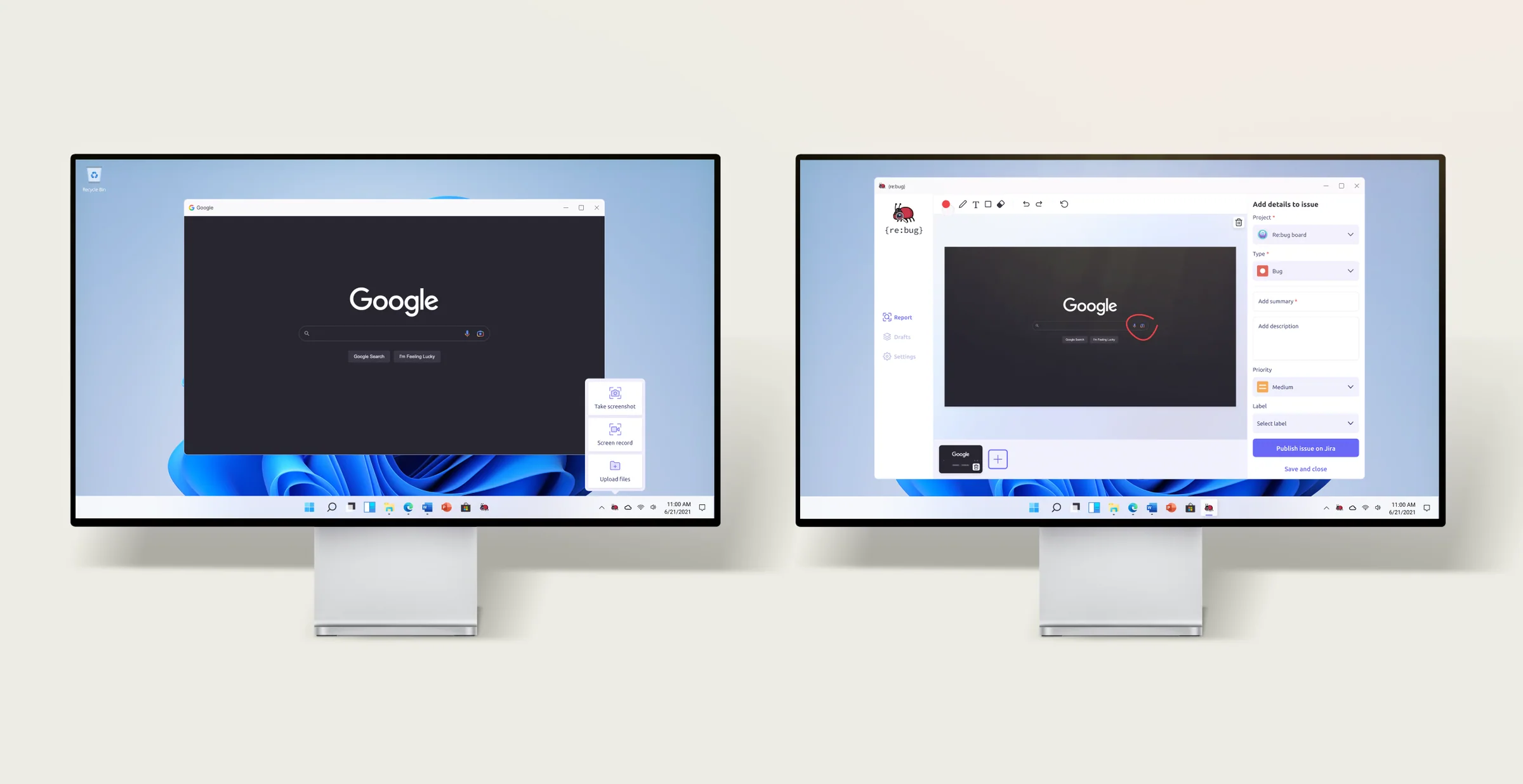
The final product • Desktop version
Following the success of the Android version, the product expanded to desktop. I translated the experience to a larger screen, refining interactions and layouts while maintaining consistency.